Renewable energy · Investment & advisory
A notch is how you
measure a river.
Cut a triangle into a weir, read the height of the water passing through it, and you know the flow — to the litre, every second, for as long as the plant will run. We took the name because the work is the same. Before capital moves, somebody has to measure what is actually there.
Drag the water surface ↕
02 — The gauge
Drag the water.
This is a working 90° thin-plate V-notch weir. Move the surface and the head h changes; the flow follows from ISO 1438, the power follows from the flow, and the revenue follows from the power. Four numbers, one after another, no assumptions of ours in any of them.
Head → flow → power → revenue
The working
Q = 8⁄15 · Cd · √(2g) · tan(θ⁄2) · h⁵ᐟ²ISO 1438, Cd = 0.58, θ = 90°P = ρ · g · Q · H · η ÷ 1000ρ = 1000 kg/m³, g = 9.81 m/s²E = P ÷ 1000 · 8760 · CFhours in a year × capacity factorIllustrative arithmetic on inputs you set. Gross figures before losses, availability, curtailment, opex, tax and financing. Not a valuation and not advice.
03 — The assets
Six things you look at, and what each one is actually telling you.
A plant is not one asset. It is a civil structure, a machine, a licence and a grid position, and they fail on completely different timescales.
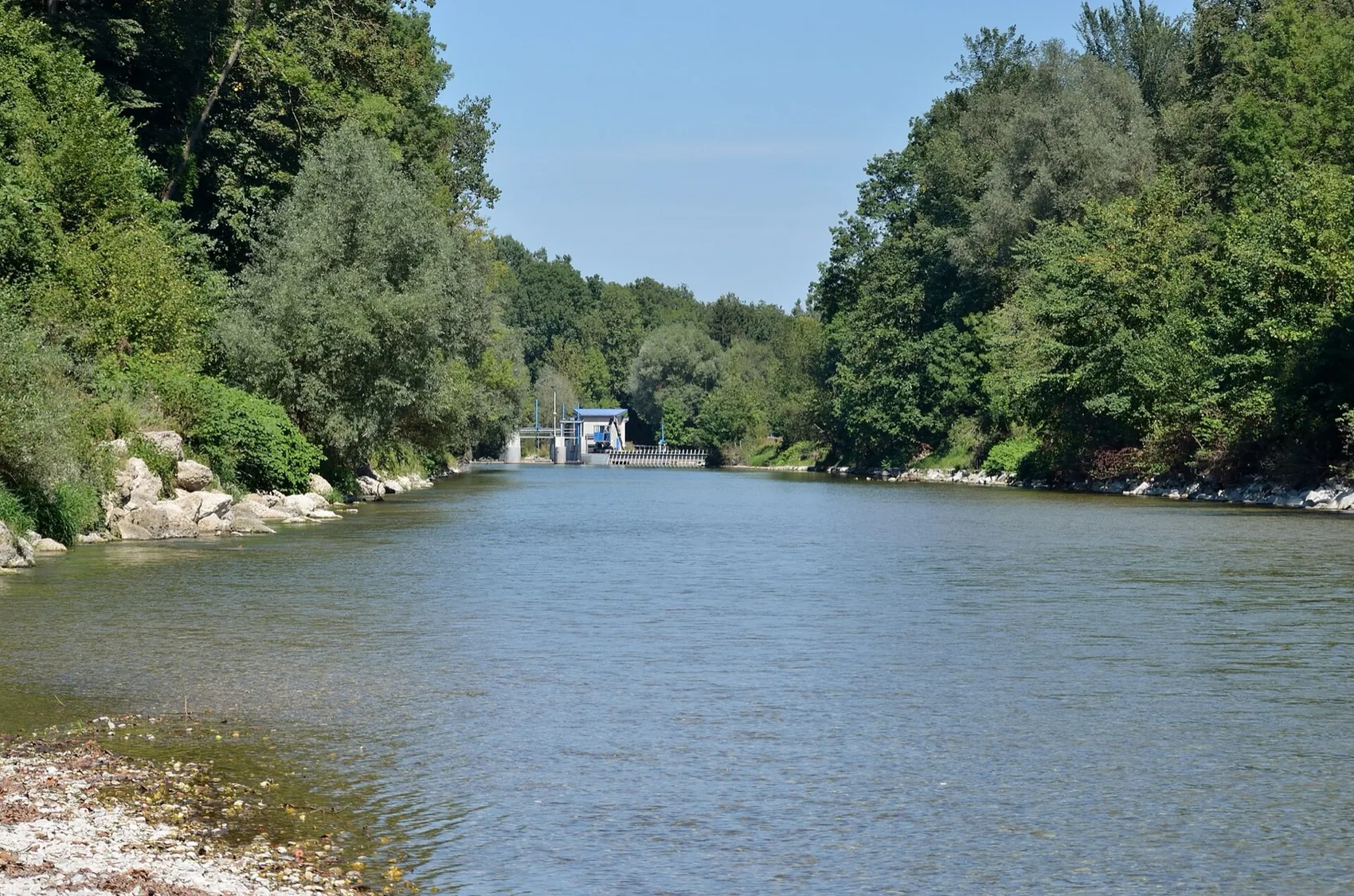
Upstream reach
The resource, before anyone has measured it. Every number downstream starts here.
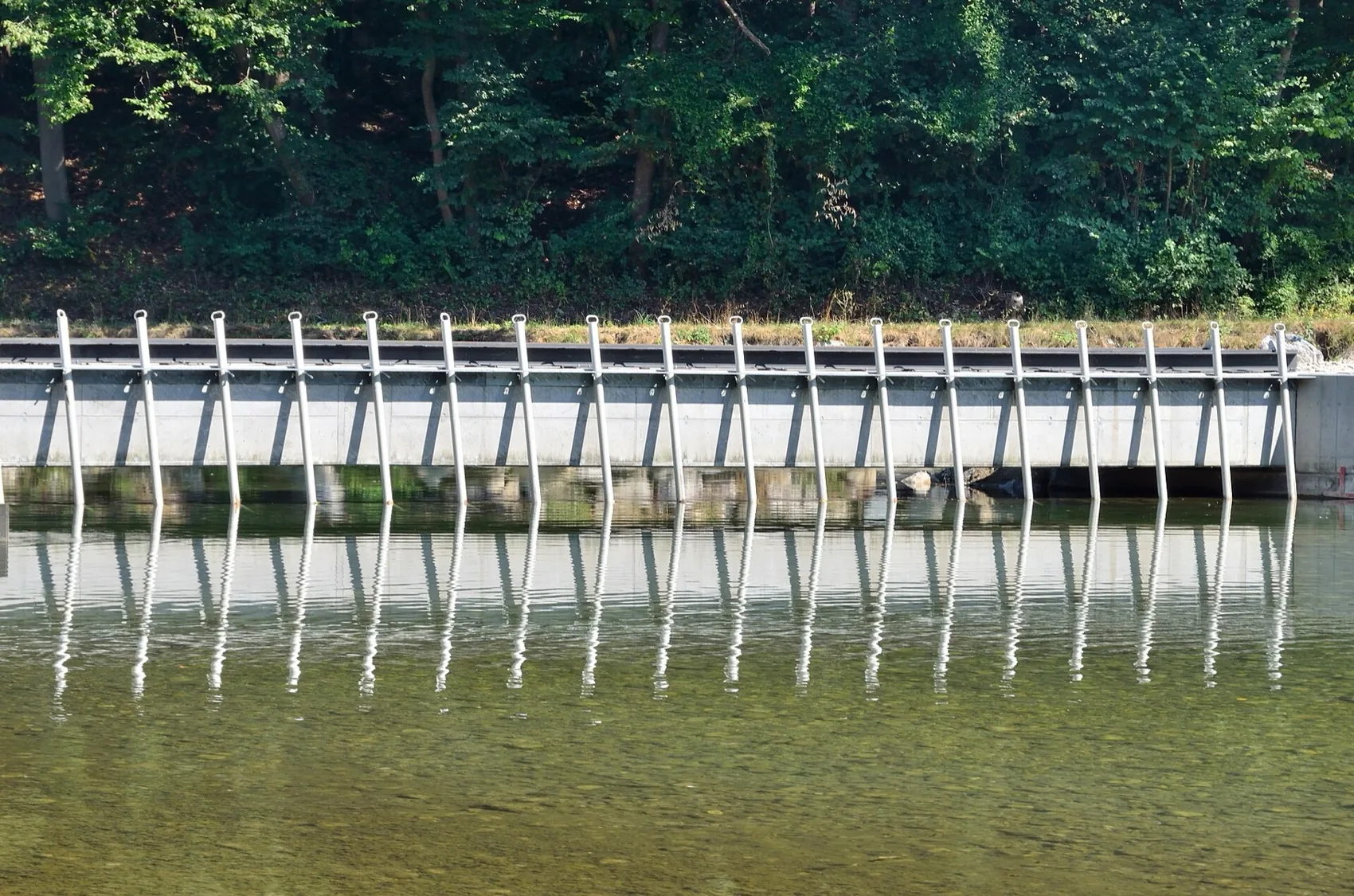
Intake screen
Everything the river carries stops here — or it does not, and it reaches the runner.
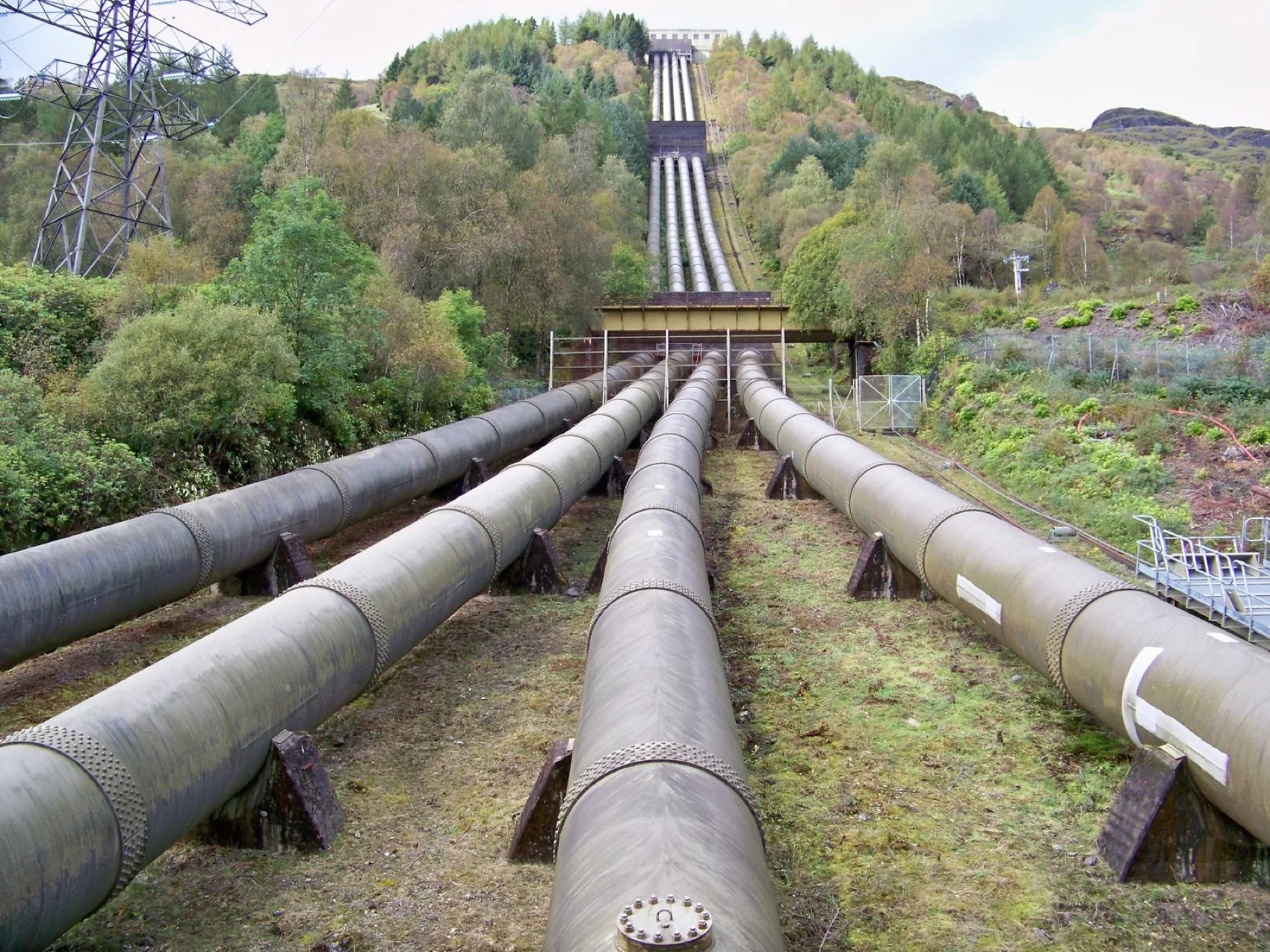
Penstock array
Head, in steel. A civil asset with a hundred-year life and a very expensive middle age.
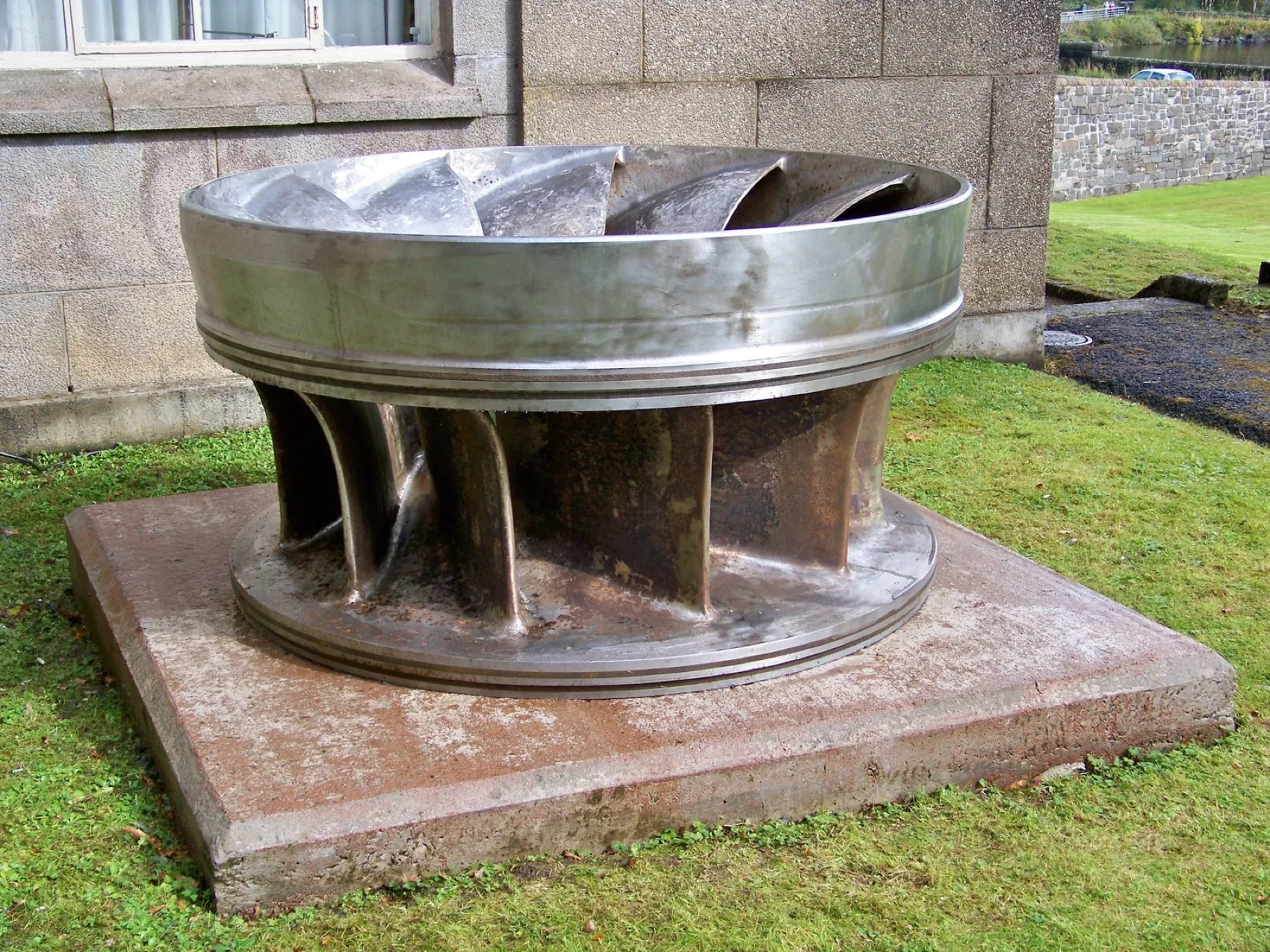
Francis runner
The part everyone photographs, and the easiest one to replace.
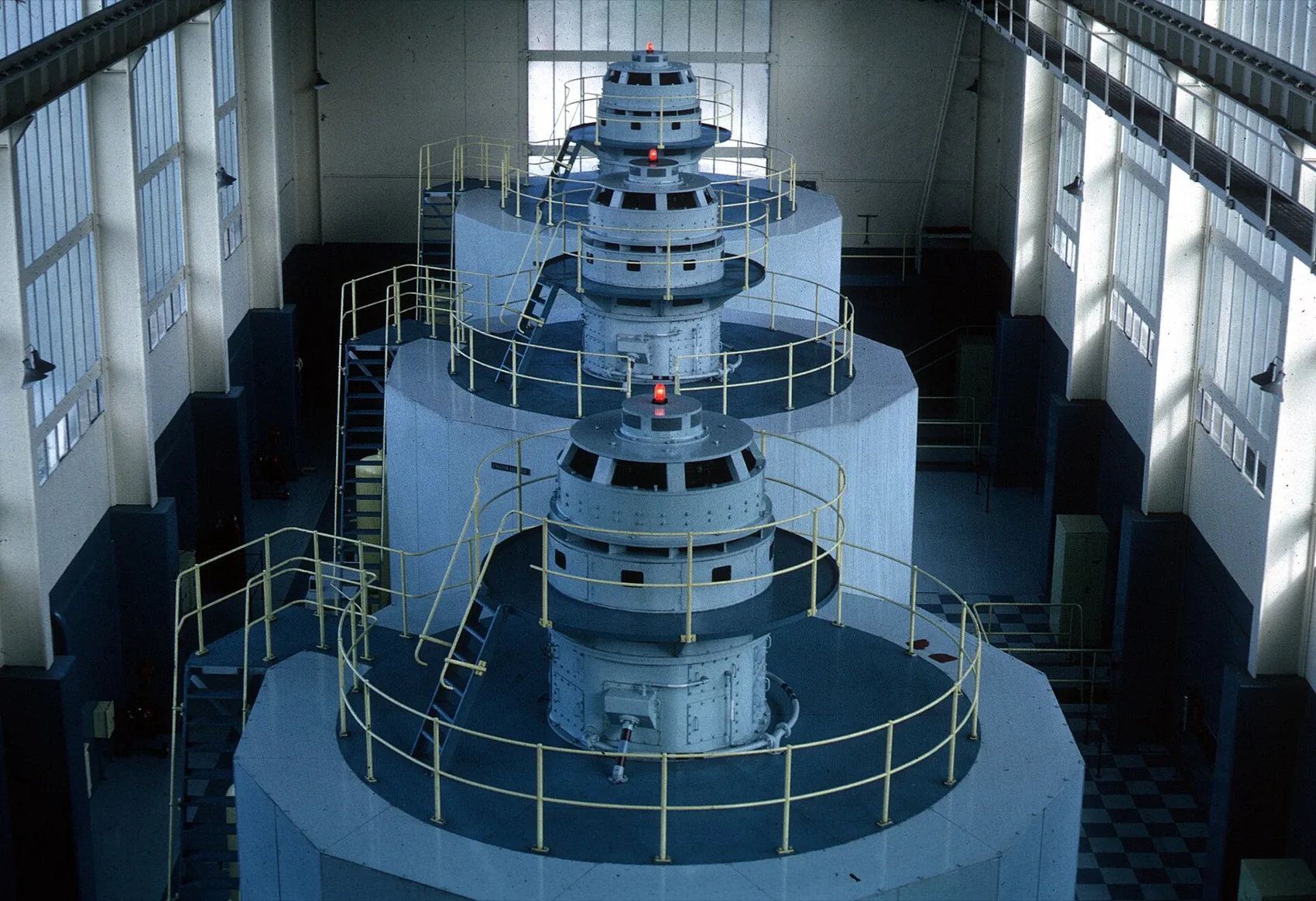
Turbine hall
Two assets on one balance sheet. The civils outlive the machine by decades.
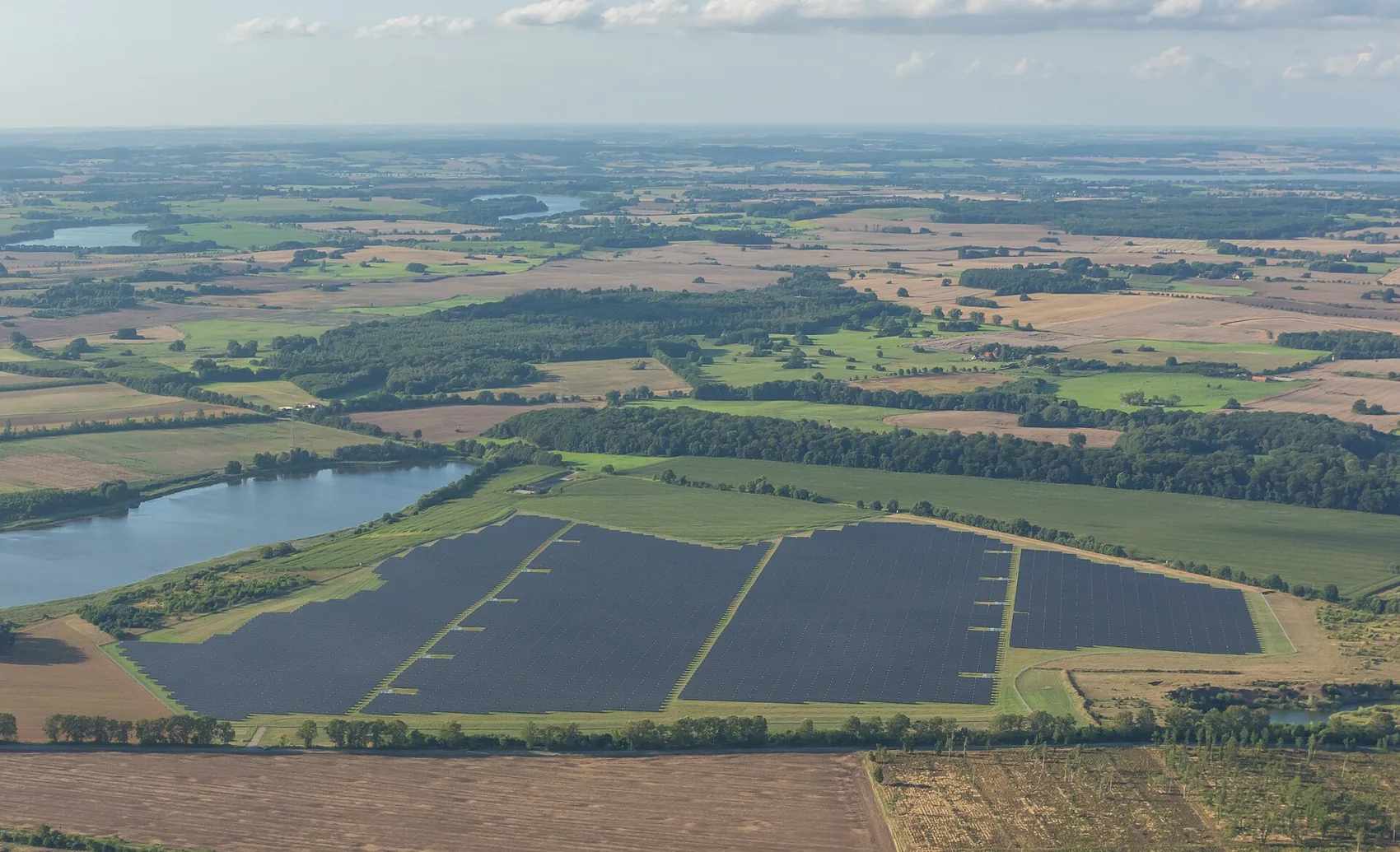
Ground-mount solar
A different asset with a different failure mode: capture price, not hydrology.
01 — Method
Measure first. Everything after that is arithmetic.
A weir gauge works because it is boring: one shape, one reading, one formula, repeated until the number is beyond argument. We appraise assets the same way — the same questions in the same order, so that two projects can be put side by side and actually compared.
An intake screen and a Francis runner. One is checked with a torch, the other with a service record. Both are on the same balance sheet and they age at completely different rates.
Read the site
Resource record and how it was measured. Civil condition separately from the machine. Consents, licences and the dates they expire. Grid position and what the connection agreement really permits.
Read the revenue
Where every euro comes from, which of those streams is contracted and which is exposed, and what happens to the model when the largest single line goes away.
Read the paper
What transfers and what does not. Whether support accreditation survives the structure chosen. Which warranties are enforceable against an entity that will still exist in year fifteen.
Say the number
One page, with the assumptions visible and the sensitivities that actually move it. If the answer is no, that page is shorter and arrives sooner.
04 — What we do
Four services. Each one ends in a number somebody can act on.
Origination and screening
Building the picture of what exists in a market and what condition it is in, then killing the candidates that should not reach an investment committee.
Technical and commercial appraisal
Generation records, resource assessment, civil and electro-mechanical condition, consents, grid position, and the revenue model that sits on top of all of it.
Transaction support
Working alongside legal and financial advisers on structure, warranties, price adjustment mechanisms and the completion conditions that actually matter.
Hybrid repowering of existing sites
An operating plant already holds the three things that hold new projects back: a live grid connection, secured land, and consents that exist. Establishing what a second technology on that connection is worth is a specific piece of work.
Boundaries we keep
- We do not develop, build or operate generating assets.
- We do not manage or hold client money.
- We do not provide investment, legal or tax advice.
- This website is for general information only and is not an invitation or inducement to engage in investment activity.
05 — Who we work with
Four different people arrive at this page. They want different things.
Tell us which one you are and the first conversation gets shorter.
You have capital and a mandate
You want assets that fit a defined profile, appraised by somebody whose value is highest on the day they say no.
Send us the mandate: technology, geography, ticket size, and what you will not do.
You are selling an asset or a portfolio
You want a buyer who understands what they are looking at, and a process that does not stall in diligence.
Send the asset: technology, capacity, year commissioned, and the reason for sale.
You are looking for capital
You want the project presented in the language an investment committee reads, with the weak points addressed before they are found.
Send the stage: consented, ready to build, or under construction — and the connection position.
You are underwriting a facility
You want an independent read on the technical and commercial assumptions before the model is signed off.
Send the scope and the deadline.
06 — Sectors
Four asset classes. Each one fails in a different way.
Not a database and not a recommendation. It is the structure of the problem — where the money comes from, what can take it away, and the questions we would ask before anyone opens a spreadsheet.
Revenue stack
- —Legacy support where the scheme still holds accreditation — this is usually the largest single line, and it is finite
- —Wholesale sales or a bilateral PPA for the balance of output
- —Embedded benefits from connecting at distribution rather than transmission level
Risk register
- —Hydrology — inter-annual variation is wide, and a short generation record hides it
- —Abstraction licence: expiry date, renewal terms, and any hands-off flow condition that can be tightened
- —Civil asset condition — weir, intake screen, headrace, penstock. Expensive, long-lived, easy to underestimate
- —Fish passage and environmental compliance obligations attached to the consent
- —Grid constraint and curtailment at the point of connection
Diligence questions we would ask first
- 01How many years of metered generation exist, and is the flow record measured on site or transposed from a gauged catchment nearby?
- 02What is P50 against P90, and which one is in the seller’s model?
- 03When does the abstraction licence expire, and on what terms has the regulator renewed comparable licences?
- 04What is the residual life of the civil works, separately from the electro-mechanical plant?
- 05How does this scheme’s load factor compare to the fleet? UK small hydro ran at 38.1 % in 2025 against 30.7 % for large hydro — run-of-river without storage is a different asset from a reservoir, and a seller’s comparables often mix the two. (DESNZ, DUKES 2026)
- 06Does the support accreditation survive a share sale? Does it survive an asset sale?
Market structure · UK
- —The legacy feed-in and certificate regimes are closed to new accreditation. Assets that still hold them are being valued largely on a finite, dated revenue tail.
- —Contracts for Difference are the principal contracted route for new build. Hydro between 5 and 50 MW is eligible in Pot 1 — and won nothing in the AR7a round of February 2026, where solar took 4,905 MW and onshore wind 1,306 MW. Anything under 5 MW is excluded from CfD altogether.
- —The Capacity Market pays for firm availability, derated by technology and duration — material for storage, marginal for run-of-river hydro.
- —Connection queue reform has moved the basis of the queue from application date towards project readiness. Queue position is now a diligence item, not an administrative footnote.
- —A cap-and-floor framework has been developed for long-duration storage, which changes the risk profile of longer-duration assets relative to one-to-two hour systems.
Structural notes. Support schemes, market rules and grid processes change — verify against the regime in force on the day of the transaction.
07 — Experience
Experience gained prior to founding Notch Energy.
This section is deliberately separated from everything above it. The projects behind this practice were delivered while working at other companies, and they belong to those companies — not to Notch Energy. Presenting them any other way would be misleading, whatever the small print said.
How each entry is marked
- The role actually performed, not the project as a whole.
- The company the work was done at, named in plain text.
- The year, the country, the technology and the capacity.
- Nothing covered by confidentiality obligations to a former employer or counterparty.
Entry format
Detailed references are provided on request and, where a counterparty has asked for confidentiality, under non-disclosure agreement.
Request the reference list08 — Contact
Send the asset, not the pitch.
Four lines is enough to start: what it is, where it is, what stage it is at, and what you need answered. If there is a data room, say so.
Enquiries are treated as confidential. No mailing list, no newsletter.
Corporate information
- Company registration number, registered office and regulatory status are published here once confirmed.
- Notch Energy is not authorised by the Financial Conduct Authority and does not carry on regulated activity.